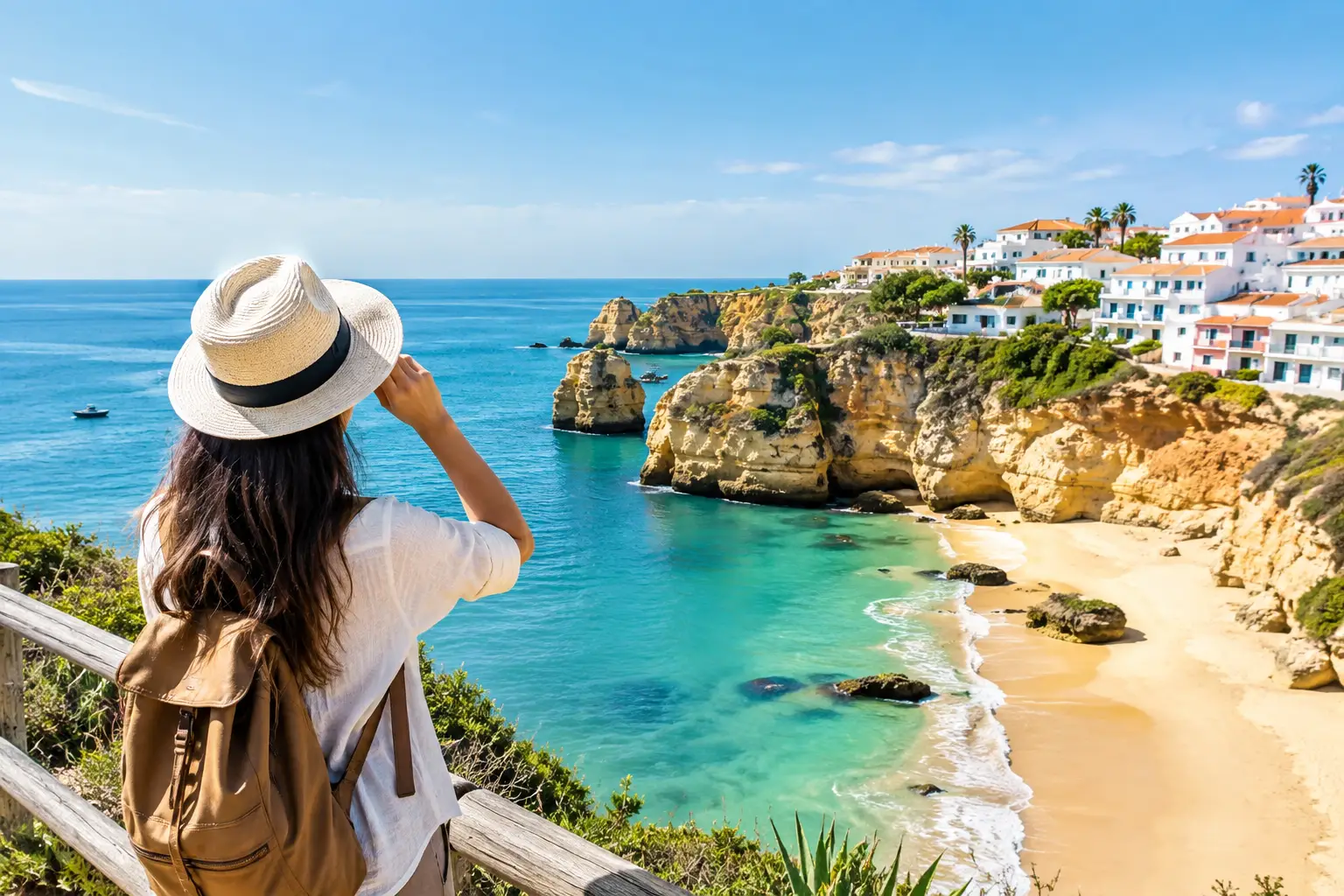
Lagos Portugal rewards travellers who arrive with a plan. Its old town is compact, its beaches sit close to dramatic cliffs, and its marina provides a calmer counterpoint to the busier streets inland. Yet the journey from Faro Airport, the choice of accommodation area and the time of year can make a significant difference to how relaxed your stay feels.
For couples, families and small groups arriving after a flight, the first decision is often practical: how to get from the airport to the hotel without collecting a car, changing buses or waiting in a taxi queue. A pre-arranged private transfer provides a direct route to your accommodation, space for luggage and the reassurance of a professional driver who knows the Algarve roads.
Getting from Faro Airport to Lagos Portugal
Lagos is on the western side of the Algarve, roughly 90 kilometres from Faro Airport. The road journey commonly takes around 60 to 75 minutes, depending on traffic, time of day and the exact drop-off point. In high summer, allow extra time around popular coastal areas and during weekend changeovers.
Public transport can work for travellers with flexible schedules and light luggage, but it is rarely the simplest option after an international arrival. It may involve a connection through Faro, waiting for the next service and a further journey from Lagos station or bus terminal to your hotel. This can be inconvenient for families with children, late-evening arrivals or guests staying outside the town centre.
A private airport transfer is the more straightforward choice when you want to leave Faro Airport and travel directly to Lagos. Your driver meets the agreed arrival arrangements, the vehicle is reserved for your party, and you avoid managing tickets, transfers and unfamiliar routes. It is especially useful when several people are travelling together, as the cost can be easier to manage than separate transport arrangements.
When booking, provide your flight details, passenger number, luggage requirements and accommodation address. If you are staying at a villa, flat complex or property on a narrow residential road, clear address information helps ensure a smooth door-to-door arrival.
Where to Stay in Lagos
The best area depends on the type of holiday you want. Lagos has enough variety to suit a short break, a beach-focused week or a longer Algarve stay, but each location has practical trade-offs.
Old Town
The historic centre is best for travellers who want restaurants, cafés, shops and evening atmosphere within walking distance. Streets are characterful but can be busy in peak season, and some accommodation has limited vehicle access immediately outside. A driver may need to stop at the nearest suitable point, particularly around pedestrianised lanes.
Marina and Meia Praia
The marina area feels more open and modern, with good access to the long sands of Meia Praia. It suits guests who prefer wider roads, newer accommodation and a less enclosed setting than the old town. Meia Praia itself is a practical choice for beach time, though it is less convenient if you expect to walk into the centre several times each evening.
Dona Ana, Porto de Mós and the western coast
These areas are popular for the Algarve scenery visitors expect from Lagos: golden cliffs, sheltered coves and coastal paths. They can be excellent for a quieter stay, particularly for couples and families, but a car or local transport may be useful for dinner in town. A private transfer is valuable on arrival, as hotels and villas here are often spread along hilly roads rather than grouped around the central station.
Beaches and sightseeing without rushing
Lagos is not a destination to treat as a checklist. The coastline is best enjoyed with time to stop, swim and walk rather than trying to fit every beach into one afternoon.
Praia Dona Ana and Praia do Camilo are known for clear water and striking rock formations. They are beautiful, but their popularity means early morning or later afternoon often feels more comfortable in summer. Steps down to the sand are part of the experience, although they may be less suitable for anyone with limited mobility or a pushchair.
For an easier beach day, Meia Praia offers a long, open shoreline with more room to spread out. It is a good option for families, longer walks and visitors who prefer fewer stairs. Porto de Mós combines a broad beach with dramatic surroundings, while Ponta da Piedade is ideal for views, coastal walks and boat trips through the rock formations.
In the old town, allow time for the town walls, small squares and a slow meal rather than moving from attraction to attraction. Lagos has a lively evening scene, particularly from late spring through early autumn, but it does not require late nights to be enjoyable. A relaxed dinner followed by a walk around the marina is often enough after a day in the sun.
Choosing the right time to visit
Lagos has appeal throughout much of the year, but weather and crowd levels change the experience considerably. July and August bring the hottest conditions, busiest beaches and highest demand for accommodation and transfers. For travellers tied to school holidays, booking transport early is sensible, particularly for larger parties or travellers carrying sports equipment.
May, June, September and early October are often a strong balance of warm weather, longer days and more manageable crowds. Sea temperatures can still vary, especially earlier in the season, but these months are well suited to beach walks, golf, boat trips and exploring the western Algarve.
Winter offers a quieter version of Lagos. Some seasonal businesses operate with reduced hours, and beach weather is less predictable, but the town remains a good base for travellers who value mild days, local restaurants and coastal scenery over swimming. A reliable airport transfer can be particularly helpful during this period, when public transport schedules may be less convenient and daylight is shorter.
Practical details for a smoother stay
Lagos is walkable in the central areas, but the coast is hillier than many first-time visitors expect. Comfortable footwear is useful for cobbled streets, cliff paths and steps to smaller beaches. If mobility is a concern, choose accommodation near the marina, Meia Praia or a flatter part of the centre, and check vehicle access before booking.
For day trips, Lagos works well as a base for Sagres, the west coast and smaller Algarve towns. However, distances can look short on a map while driving times increase on coastal roads. If you are planning several excursions, weigh up the convenience of a hire car against parking, unfamiliar road rules and the need to drive after dinner. For airport arrivals and departures, a private transfer keeps that part of the journey simple even if you use other transport during the stay.
Departure planning matters too. Confirm your pick-up time with enough allowance for the journey to Faro Airport, seasonal traffic and your airline's check-in requirements. Early flights are easier when transport is arranged in advance rather than dependent on local availability.
A holiday in Lagos works best when the travel arrangements match the pace of the destination. Arrive directly, settle in without delay, and leave the timetable open for a long lunch, a quiet cove or one more walk along the cliffs before sunset.