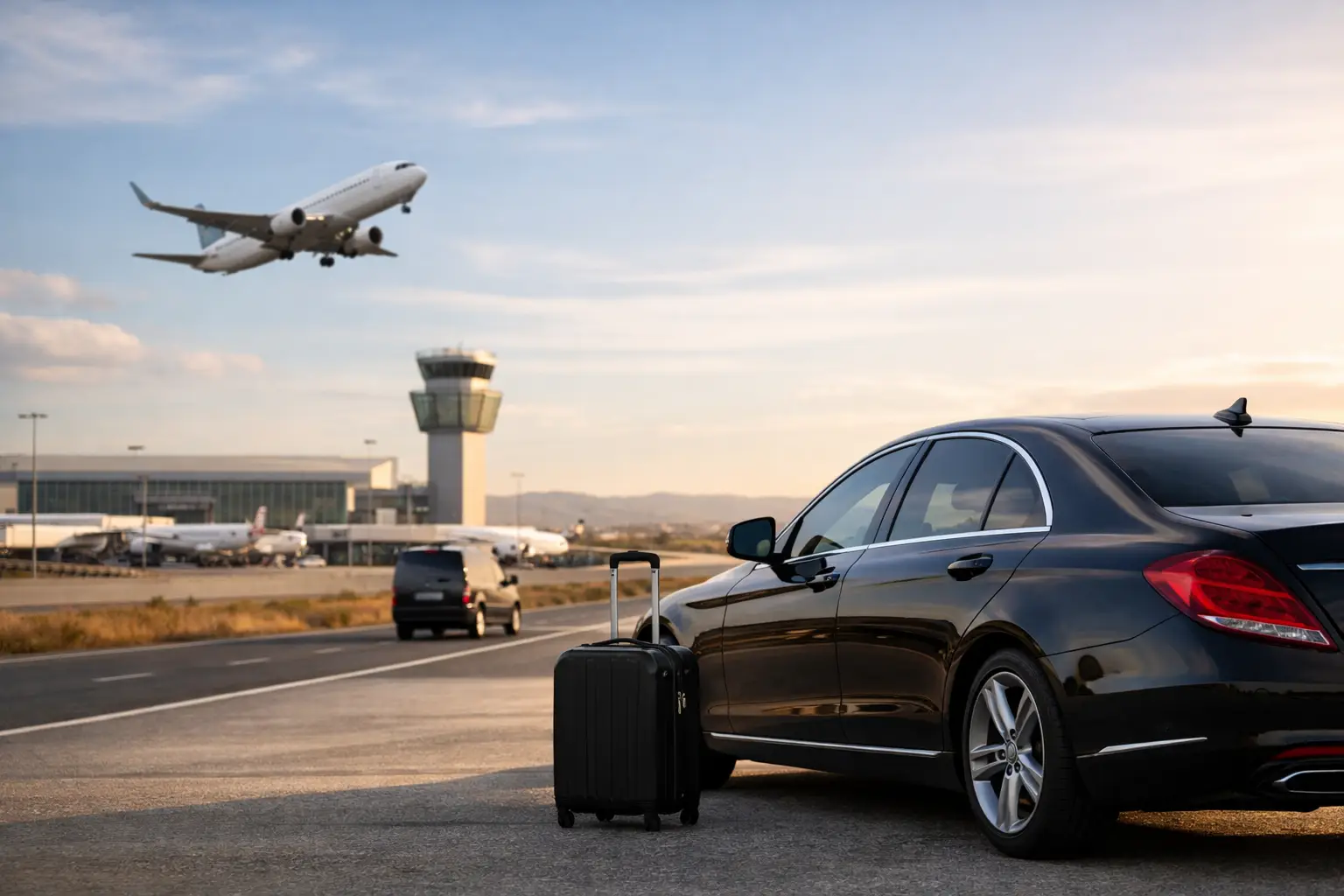
A late arrival at the airport changes the maths of the journey. What looks manageable on a map can become far less appealing after baggage reclaim, queues, and an unfamiliar station or taxi rank. That is exactly where long distance airport transfers make sense. When the trip from the terminal to your final destination is measured in hours rather than minutes, the quality of the transfer matters as much as the flight.
For many travellers, the real question is not whether a transfer is needed, but what type of transfer will remove the most friction from the day. A short urban hop leaves room for improvisation. A longer journey to a resort, another city, or a cross-border destination does not. Miss one connection, underestimate the queue for a hire car, or pick the wrong meeting point, and the simple airport arrival becomes a drawn-out travel day.
What long distance airport transfers actually cover
Long distance airport transfers are pre-arranged road journeys between an airport and a destination that is far enough away to make local taxi services, public transport, or last-minute ride apps less practical. That might mean a transfer from Faro Airport to a resort on the Algarve, a direct route to Lisbon, or onward travel into Seville.
The key difference is not only mileage. It is the level of planning required. A 15-minute journey can often be managed on arrival. A two or three-hour transfer usually needs fixed pricing, clear pickup instructions, a suitable vehicle, and a driver who knows the route well. Without that, travellers are left piecing together several steps when they are least likely to want them.
This is why longer airport transfers tend to suit private, door-to-door transport. The service is built around the full journey, not simply the first leg after landing.
Why longer transfers need a different standard of service
The longer the route, the more visible the weak points become. Small delays and minor misunderstandings add up over distance. If you are travelling with children, heavy luggage, golf bags, or simply after a long flight, convenience stops being a luxury and becomes part of basic travel planning.
A dependable long-distance transfer service gives travellers clarity before they land. You know who is collecting you, what vehicle to expect, where the route is going, and how the price is structured. That matters far more on a journey of 150 or 250 kilometres than it does on a quick trip into town.
Comfort also matters differently on a long route. A modern vehicle with proper luggage space, air conditioning, and enough room for everyone is not a detail. It shapes the whole arrival experience. The same applies to the driver. For a short trip, local knowledge is useful. For a longer route, it is operationally important. Road choice, traffic timing, border familiarity, and practical pickup management all have a direct effect on punctuality.
Private transfers versus other options
There is no single right answer for every traveller. The best option depends on budget, timing, group size, and how much complexity you are willing to manage after a flight.
Public transport can work well when the destination is well connected, the arrival time is convenient, and travellers are comfortable changing between rail, coach, or local taxi services. It is often the lower-cost option, but only if the route is straightforward. Once multiple changes are involved, the saving may feel less worthwhile.
Taxis are useful for local journeys, but for longer routes they can be less predictable. Availability, vehicle size, and final pricing may vary, especially during peak arrival periods. Some drivers may not be interested in very long trips, while others may accept them without the regional specialisation that helps the journey run smoothly.
Hire cars offer flexibility, especially for travellers planning to move around during the stay. But they also add paperwork, deposits, fuel decisions, parking concerns, and the responsibility of driving in an unfamiliar area after a flight. For some people that is manageable. For others, it is exactly what they want to avoid.
Private long distance airport transfers sit in the middle of that decision. They are not the cheapest option in every case, but they are often the most controlled. For families, couples with luggage, business travellers on a schedule, or small groups dividing the cost, the value is often in reduced uncertainty rather than headline price.
When long distance airport transfers are the better choice
Some journeys are especially well suited to private airport transport. Late-night arrivals are one of the clearest examples. Public transport options narrow, taxi availability becomes less certain, and travellers are less inclined to troubleshoot after dark.
Early departures matter too. If the return transfer starts before sunrise, having a confirmed driver and a direct route removes a common source of travel stress. The same applies to first-time visitors who do not know the airport layout, local road network, or transport habits in the region.
Cross-border travel is another area where experience counts. A route between Portugal and Spain is perfectly manageable by road, but not every transport option handles it with the same consistency. A professionally arranged transfer is often simpler than combining local services across jurisdictions.
Longer airport journeys also make sense for groups whose luggage changes the equation. Pushchairs, sports equipment, extra cases, and child seats all need to be accounted for before pickup, not solved on the kerb.
What to check before booking
Not every transfer service is built for longer routes. A company may handle short local runs well but be less prepared for intercity or cross-border travel. Before booking, travellers should look at the basics first: service area, vehicle suitability, and whether the route is genuinely routine for the provider.
Clarity is a good sign. If the booking process confirms pickup details, destination, passenger numbers, luggage needs, and flight information, that usually reflects a more reliable operation. The same is true of clear communication on waiting time, meeting arrangements, and any child seat request.
It is also worth paying attention to how the service presents itself. Professional drivers, modern vehicles, and direct airport-to-destination transport are not marketing extras on a long route. They are core service standards. If those details are vague, travellers may end up managing the gaps themselves on the day.
For routes through southern Portugal and onward to major destinations, regional knowledge matters more than people often expect. A specialist operator such as Lisbon Seville Faro Riders is not simply providing a car with a driver. The real value is route familiarity, airport transfer focus, and the ability to handle long-distance journeys with fewer variables.
How the journey feels on the day
The main advantage of a pre-booked long-distance transfer is that it compresses the decision-making. Once you land, there is no need to compare queues, negotiate with drivers, study onward timetables, or work out whether the luggage will fit. You move from arrivals to the vehicle and continue directly to the destination.
That directness is often underestimated. Travel fatigue affects judgement. Families become slower to move. Business travellers may be trying to make calls or prepare for a meeting. Couples heading to a resort usually want the holiday to begin, not to spend the first two hours solving logistics.
A good transfer feels calm because most of the work has already been done in advance. The route is known. The pickup is planned. The vehicle is appropriate. That is the kind of efficiency people notice most after a long flight.
Cost, value, and realistic expectations
Price still matters, and it should. Long-distance private transfers are a premium service compared with buses or trains. For solo travellers on a simple route, public transport may still be the sensible choice. There is no benefit in pretending otherwise.
But value depends on context. If a family or group is travelling together, the cost per person may compare more favourably than expected. If the journey saves several changes, avoids a hire car desk, and removes the risk of arrival delays causing missed connections, the practical value can outweigh the difference in fare.
The better way to assess cost is to compare the full door-to-door journey, not just the base ticket price. Time, comfort, certainty, and effort all belong in that calculation.
Long airport journeys are rarely the part of a trip people look forward to, but they do shape the first and last impression. If the route is long, unfamiliar, or time-sensitive, choosing a transfer that is designed for that distance is often the simplest way to travel well.